
Unlock Your Body’s Potential with These Stretching Exercises
Getting better at flexibility and feeling good can be easy. Just do simple exercise routines.
Doing stretching often helps you move better. It also makes your muscles less tight. And it helps you live healthier.
Adding fitness stretching to your day can really help. You’ll see the benefits and start feeling more balanced.
Key Takeaways
- Improve flexibility through regular exercise
- Enhance overall well-being with stretching routines
- Reduce muscle tension and promote relaxation
- Increase range of motion for better mobility
- Support a healthier lifestyle with fitness stretching
The Science Behind Stretching and Why It Matters
Stretching does more than just make us flexible. It touches our body’s inner workings. “Stretching is not just a physical activity; it’s a gateway to understanding and improving our body’s systems,” says a famous physiotherapist.
How Stretching Affects Your Muscles and Joints
Stretching changes our muscles and joints a lot. It makes our muscles stretchier.
Muscle Fibers and Elasticity
Muscle fibers have parts called sarcomeres. Stretching makes these parts longer. This makes our muscles more elastic.
This elasticity helps our muscles work better. It also lowers the chance of getting hurt.
Joint Mobility and Range of Motion
Stretching also helps our joints move better. It makes our joints more flexible. This makes it easier to move around.
The Connection Between Stretching and Overall Health
Stretching does more than just make us flexible. It also helps our overall health. It affects our blood flow and our nervous system.
Circulation and Nutrient Delivery
Stretching helps our blood flow better. This is key for getting nutrients to our muscles. It also helps get rid of waste.
This better blood flow helps us stay healthy. It also helps us recover faster.
Nervous System Benefits
Stretching also helps our nervous system. It reduces stress and improves how our nerves work together. Stretching calms our minds and gets our bodies ready for action.
In short, stretching is good for many reasons. It makes our muscles and joints better. It also helps our blood flow and nervous system. By stretching, we’re not just getting flexible. We’re making our whole body healthier.
Key Benefits of Regular Stretching Routines
Stretching is good for many things. It makes you feel better in body and mind. Adding stretching to your day can really help.
Physical Benefits: Flexibility, Mobility, and Pain Reduction
Stretching makes you more flexible and mobile. This means you can move better and feel less stiff. It also helps with pain because tight muscles and joints hurt.
Preventing Muscle Imbalances
Stretching keeps muscles balanced. This is key for good posture and avoiding injuries.
Alleviating Chronic Pain Points
Stretching can ease long-term pain. It’s good for back pain and makes life better.
Mental Benefits: Stress Relief and Improved Focus
Stretching is good for your mind too. It reduces stress and boosts focus. This is because stretching connects your mind and body.
The Mind-Body Connection During Stretching
Stretching makes you more aware of your body. This helps with stress and makes you feel better mentally.
Performance Benefits for Athletes and Active Individuals
Stretching is key for athletes. It boosts performance and prevents injuries. It makes you more flexible and faster.
Injury Prevention Through Proper Stretching
Stretching helps athletes avoid injuries. It makes muscles less tight and improves flexibility. This lowers injury risk during sports.
| Benefit | Description |
|---|---|
| Flexibility | Improved range of motion and reduced stiffness |
| Stress Relief | Reduced mental tension and improved relaxation |
| Injury Prevention | Lower risk of injury through improved flexibility and strength |
Experts say stretching is great for health and performance. Many studies back this up, showing its benefits for body and mind.
“Stretching is essential for maintaining flexibility and preventing injuries. It’s a simple practice that can have a profound impact on overall health.”
Different Types of Stretching Techniques Explained
Stretching is not just one way to do it. There are many techniques for different needs and goals. Knowing these methods helps you make your stretching better.
Static Stretching: When and How to Use It
Static stretching means holding a stretch for 15-30 seconds. It makes your muscles more flexible and less tight. You can do it after working out or on its own.
Passive vs. Active Static Stretches
Static stretches can be passive or active. Passive stretches use someone else or a tool to help stretch you. Active stretches use your own strength to stretch.
Dynamic Stretching: Benefits for Warm-ups
Dynamic stretching moves your joints and keeps your muscles working. It’s great for warming up before you exercise. It gets your blood flowing and muscles ready.
Movement-Based Stretching Examples
Leg swings, arm circles, and torso twists are examples of dynamic stretches. They make your muscles loose and improve your flexibility.
PNF and Other Advanced Stretching Methods
PNF (Proprioceptive Neuromuscular Facilitation) stretching is advanced. It involves contracting and then relaxing certain muscles. It’s good for flexibility and strength.
Contract-Relax Techniques
One PNF method is contract-relax. You contract a muscle, then relax it, and stretch it. This method can make a stretch deeper.
Using these stretching techniques can make you more flexible. It also helps you perform better and avoid injuries.
Essential Upper Body Stretching Exercises
Stretching your upper body is key to staying flexible and easing muscle tightness. It helps improve your posture and lowers injury risks. Plus, it boosts your physical performance.
Neck and Shoulder Stretches for Desk Workers
Desk workers often get neck and shoulder pain from sitting too long and bad posture. Neck stretches can ease this pain.
Arm and Chest Stretches for Improved Posture
Arm and chest stretches help straighten your posture. They fight against the leaning forward you do at your desk.
Back Stretches to Relieve Tension
Stretching your back can ease tension and boost flexibility. Cat-Cow and Child’s Pose are great for this.
Cat-Cow and Child's Pose Variations
Start Cat-Cow on hands and knees. Arch your back, lifting your tailbone and head up (Cat Pose). Then, round your back, tucking your chin and tailbone down (Cow Pose). Do this a few times. For Child’s Pose, kneel, then sit back on your heels. Stretch your arms out and lower your forehead to the ground.
| Stretch | Target Area | Benefit |
|---|---|---|
| Neck Stretch | Neck | Relieves tension |
| Doorway Stretch | Chest | Improves posture |
| Cat-Cow Pose | Back | Enhances flexibility |
Lower Body Stretching Exercises for Flexibility and Strength
To get better flexibility and strength, focus on lower body stretches. These stretches help you move better, avoid injuries, and do sports better.
Hip and Glute Stretches for Mobility
Hip and glute stretches keep you flexible and prevent stiffness. Pigeon Pose and Figure-Four Stretch are great for this.
Pigeon Pose and Figure-Four Stretch
Pigeon Pose stretches your glutes and piriformis muscle. Start on hands and knees, bring one knee forward, and stretch the other leg back. The Figure-Four Stretch can be done on the floor or while sitting.
Hamstring and Quad Stretches for Athletes
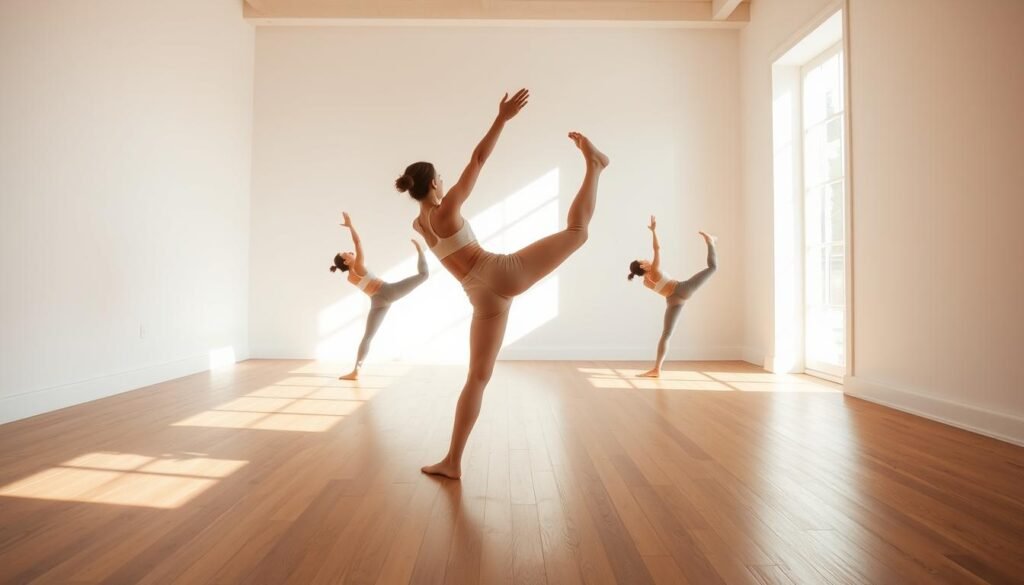
Athletes need hamstring and quad stretches. These muscles work a lot in sports. Standing and Seated Variations are good for these areas.
Standing and Seated Variations
Standing hamstring stretches mean leaning forward at the hips. Seated ones are done on the floor with legs out. Quad stretches are done by standing, bending one knee, grabbing the ankle, and pulling it towards your glutes.
Calf and Ankle Stretches for Better Balance
Calf and ankle stretches help with balance and prevent ankle injuries. Wall Stretches and Downward Dog adaptations are good for this.
Wall Stretches and Downward Dog Adaptations
Wall stretches are done by standing with one foot back and pressing the heel into the ground. Downward Dog adaptations stretch the calf and Achilles tendon by bending the knee or changing the foot position.
Full-Body Stretching Routines for Maximum Results
Full-body stretching routines are great for improving flexibility and reducing stress. Adding these exercises to your daily routine can greatly improve your physical and mental health.
5-Minute Morning Stretching Routine
A short morning stretch can wake up your body and get you ready for the day. Start with gentle neck stretches. Then, do shoulder rolls and chest opens.
Next, do leg swings and calf raises to get your blood flowing.
Energizing Movements to Start Your Day
- Neck Stretch: Slowly tilt your head to the side, bringing your ear towards your shoulder.
- Shoulder Rolls: Roll your shoulders forward and backward in a circular motion.
- Leg Swings: Stand with your feet hip-width apart and swing one leg forward and backward.
15-Minute Post-Workout Stretching Sequence
After working out, it’s key to cool down and stretch. This sequence should cover hamstring, quadriceps, and chest stretches.
Cooling Down Major Muscle Groups
- Hamstring Stretch: Stand with your feet shoulder-width apart and lean forward, reaching for your toes.
- Quadriceps Stretch: Stand with one hand against a wall and lift one leg behind you, grabbing your ankle with your hand.
- Chest Stretch: Stand in a doorway with your hands on the doorframe at shoulder height and lean forward.
30-Minute Deep Stretching Session
For a deeper stretch, spend 30 minutes on progressive relaxation. Start with your upper body, then move to your lower body. Finish with relaxing poses.
Progressive Relaxation Techniques
Start with deep breathing exercises. Then stretch your major muscle groups, holding each for 15-30 seconds. As you go, relax your muscles more with each breath.
| Routine | Duration | Benefits |
|---|---|---|
| Morning Stretching | 5 minutes | Energizes the body, improves flexibility |
| Post-Workout Stretching | 15 minutes | Reduces muscle soreness, improves recovery |
| Deep Stretching | 30 minutes | Enhances flexibility, promotes relaxation |
Incorporating Stretching Into Your Daily Life
Making stretching a part of your daily life can greatly improve your health. Simple stretches can make you more flexible and reduce muscle tension. They also help you feel better overall.
Desk-Friendly Stretches for the Workplace
If you sit at a desk a lot, desk stretches can really help. Neck rolls and shoulder shrugs can ease the pain of sitting too long.
Subtle Movements for Office Privacy
You can do these stretches quietly without anyone noticing. Try subtle movements like wrist extensions and ankle rotations to keep your blood flowing.
Bedtime Stretches for Better Sleep
Bedtime stretches can get your body ready for sleep. Gentle stretches relax your muscles and calm your mind, leading to better sleep.
Gentle Relaxation Sequences
Adding gentle relaxation sequences to your bedtime routine is a good idea. These slow, controlled movements tell your body it’s time to sleep.
Quick Stretches You Can Do Anywhere
Quick stretches are great for busy days. Simple stretches like toe touches and side bends can be done almost anywhere.
No-Equipment Options for On-the-Go
One of the best things about quick stretches is they don’t need any equipment. You can do them at work, home, or while traveling.
| Stretching Activity | Benefits | Best Time to Do |
|---|---|---|
| Desk Stretches | Reduces office strain, improves posture | During work hours |
| Bedtime Stretches | Promotes relaxation, improves sleep | Before bed |
| Quick Stretches | Boosts energy, improves flexibility | Anytime, specially during breaks |
Common Stretching Mistakes and How to Avoid Them
To get the most from stretching, it’s key to steer clear of common errors. Stretching right can boost flexibility, cut down injury risk, and up your game. But, mistakes can undo these gains and even cause harm.
Overstretching: Signs and Prevention
Overstretching happens when you push your muscles too far, leading to tiny tears. Look out for sharp pain or feeling unstable in your joints. To dodge overstretching, listen to your body and stop if it hurts.
Understanding Your Body's Limits
Knowing your flexibility limits is vital. Begin slow and slowly stretch further. This way, you avoid overstretching and get better at stretching.
Improper Form and Alignment Issues
Stretching wrong can be ineffective or even hurt you. Keeping the right alignment is key. For example, keeping your back straight when stretching your hamstrings targets the right muscles.
Visual Cues for Correct Positioning
Visual cues can keep your form right. Check your posture in a mirror or use a stretching guide. This helps you adjust to stretch better.
Timing Your Stretches Incorrectly
When to stretch matters a lot. Stretching at the wrong time can backfire. Dynamic stretches before working out get muscles ready, while static stretches after help with recovery.
Pre vs. Post-Workout Stretching Guidelines
| Stretching Type | Pre-Workout | Post-Workout |
|---|---|---|
| Dynamic Stretching | Recommended | Not Recommended |
| Static Stretching | Not Recommended | Recommended |
Avoiding these common errors makes your stretching routine safe and effective.
Specialized Stretching for Specific Needs
There are special stretching programs for different groups. This includes seniors, expectant mothers, and those in rehab. These programs make sure stretching is safe and works well for everyone.
Stretching for Seniors: Safe and Effective Approaches
As we get older, moving around can get harder. Chair-based stretching options are great for seniors. They can do these stretches while sitting, which lowers the chance of falling.
Pregnancy-Friendly Stretching Exercises
Pregnancy brings big changes to the body. Trimester-specific modifications in stretching help ease discomfort and keep flexibility.
Rehabilitation Stretches After Injury
After an injury, gradual progression protocols are key in rehab stretches. They help avoid injury again and aid in healing.
Gradual Progression Protocols
Rehab stretches start off easy. Then, they get more intense and cover more range as healing goes on. This way, we can get strong and flexible again without hurting ourselves.
Tools and Equipment to Enhance Your Stretching Practice
The right tools can really help your stretching. They help you stretch deeper and feel more flexible. There are many tools to make stretching better and more fun.
Foam Rollers and Massage Balls
Foam rollers and massage balls help release muscle tension. They apply pressure to relax muscles and improve blood flow. This helps break up muscle knots.
Self-Myofascial Release Techniques
Using foam rollers and massage balls is easy. Place the tool on the muscle you want to stretch. Slowly move it until you feel the muscle relax.
Resistance Bands for Assisted Stretching
Resistance bands are great for stretching and strengthening. They help you stretch deeper and feel more flexible.
Creating Tension for Deeper Stretches
Resistance bands help you stretch deeper. They’re good for stretching your hamstrings and hip flexors.
Yoga Props and Their Uses in Stretching
Yoga props like blocks, straps, and bolsters help a lot. They support your body and help you stretch right, even if you’re not very flexible.
Blocks, Straps, and Bolsters
Blocks make it easier to bend forward. Straps let you stretch further. Bolsters support your body so you can stretch deeper.
| Tool/Equipment | Purpose | Benefits |
|---|---|---|
| Foam Rollers | Self-myofascial release | Relieves muscle tension, improves circulation |
| Resistance Bands | Assisted stretching and strengthening | Enhances flexibility, strengthens muscles |
| Yoga Blocks | Support in stretching | Improves alignment, makes stretches more accessible |
Using these tools can really improve your stretching. You’ll feel more flexible and comfortable. Try different tools to see what works best for you.
Creating a Personalized Stretching Program
To get the most from stretching, make a plan just for you. This way, your stretches meet your needs and goals.
Assessing Your Current Flexibility Levels
First, check how flexible you are. You can do simple tests on big muscle groups.
Simple Self-Tests for Major Muscle Groups
Try tests like the hamstring stretch, hip flexor stretch, and shoulder test. They show where you need to stretch more.
| Muscle Group | Self-Test Exercise | Indicator of Flexibility |
|---|---|---|
| Hamstrings | Seated Forward Bend | Ability to touch toes |
| Hip Flexors | Kneeling Hip Flexor Stretch | Depth of stretch without pain |
| Shoulders | Arm Circle | Range of motion without discomfort |
Setting Realistic Stretching Goals
After checking your flexibility, set goals. Make them clear, measurable, and doable.
Progressive Benchmarks for Improvement
Set goals that get better over time. For example, aim to stretch your hamstrings more in a few weeks.
Tracking Progress and Making Adjustments
It’s important to watch how you’re doing. Use a journal or app to track your progress.
Journaling and Measurement Methods
Writing down your stretches or using an app helps you see how far you’ve come. This way, you can adjust your plan as needed.
Conclusion: Embracing Stretching as a Lifelong Practice
Stretching every day can really change your life. It makes you feel better and move easier. It’s good for your body and mind.
Stretching can feel like a special time for you. It helps you deal with hard times better. Always be gentle with your body and listen to it.
Starting to stretch now means you’re choosing a healthier life. It’s a step towards being more flexible and full of life. So, start stretching today for a better tomorrow.
FAQ
What are the benefits of incorporating stretching into my daily routine?
Stretching daily can make you more flexible. It also helps reduce muscle tension. Plus, it boosts your athletic performance and overall health.
How often should I stretch to see noticeable improvements in flexibility?
Stretching 2-3 times a week can show big improvements in flexibility. But, stretching every day can make you progress even faster.
What is the best time to stretch, before or after a workout?
Stretching after a workout is best. Your muscles are warm, which helps you stretch better. It also reduces muscle soreness.
Can stretching help alleviate chronic pain?
Yes, stretching can ease chronic pain. It releases muscle tension and improves joint movement.
Are there any specific stretching techniques that are more effective than others?
Yes, some techniques are better than others. PNF stretching and dynamic stretching are great for improving flexibility and range of motion.
How long should I hold a stretch to get the most benefit?
Holding a stretch for 15-30 seconds is best. But, for deeper stretches, you might need to hold longer.
Can I use stretching tools like foam rollers and resistance bands to enhance my stretching practice?
Yes, tools like foam rollers and resistance bands can help. They make stretches deeper and improve flexibility.
Are there any stretching exercises that are safe during pregnancy?
Yes, there are safe stretches for pregnant women. They help improve flexibility and reduce discomfort.
How can I create a personalized stretching program that meets my needs?
To make a stretching program, first check your current flexibility. Then, set goals and track your progress. This helps tailor a program just for you.
